
Why We Work
High Iron is built and carried by people — artists, descendants, stewards, organizers — whose own reasons for showing up are as varied and personal as the histories the boxcar holds.
Elena Rosales
Great-granddaughter of Jesús Sánchez
Working at High Iron helped me feel connected to my past and future.
As I'd do my opening tasks for this job, I'd see the faces of the many workers who built our railroad. I'd see their families too — framed and hung neatly. As I'd dust the top of the frames and straighten them, I wondered if this was enough of a thank you. I've heard trains scream through Laramie all my life — they've served as my alarm clock, my reminder to eat dinner, my only form of entertainment during boring nights downtown. For all the service that the railroad has done, I'd hope my morning dusting was enough.
My great-grandpa was one of the many hands who built the railroad, and one of the faces displayed inside the car. I've heard stories of him, but never met him myself. I know, more than anything else about him, that he immigrated to the U.S. for his family, worked hard and humbly, and did whatever he could for the sake of his family.
As I'd stare at his picture frame, I'd question what he'd think of all this — call it a feeling, call it a sign, but I think he'd be proud, not that there was a display with his name on it, but that his family is the one that made it.
When visitors would come in and ask about the displays, often what impacted them most was what the families of those displayed did to make their display special. The small thoughts that truthfully personified the photos stared at. Whether it be cranes or embroidery, visitors seemed to love the small thoughts put into making these displays so special.
Seeing my great-grandpa displayed and knowing how much love went into it made me think of how I'll be remembered, and that led me to realize that the effort I put in matters, if not to me, then to the people I love. I never met my great-grandpa, but whenever my legs hurt or I want to give up, I remember how hard he worked, and that is one of the only things that truthfully motivates me. I know he worked hard not just for his immediate family, but for the one that could exist, the generations to come. I know my life is the way it is because he immigrated all those years ago. He worked hard to get me here, and I will work hard to make him proud. In the future, long after I'm gone, I hope my family knows how hard I worked for them, and I hope they know that so much of it is because of him.
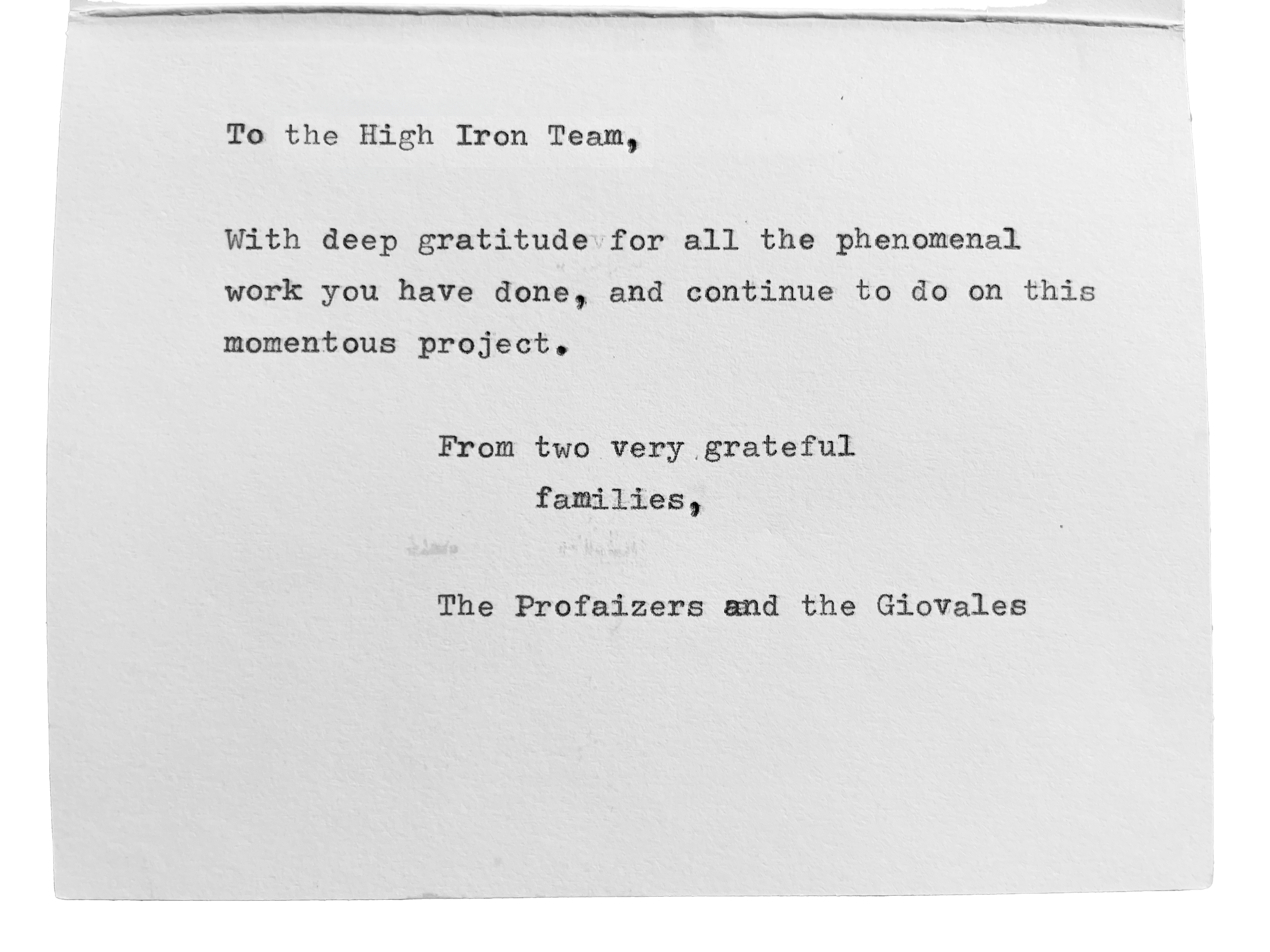
"Thank you, Jesús Sánchez, for all the hard work you did."
"There were also Greeks and Italians. People up from New Mexico, from Alabama, from Guatemala. Immigrants from all over the world. And they brought their traditions with them, their customs. Across the nation as they built the railroad."
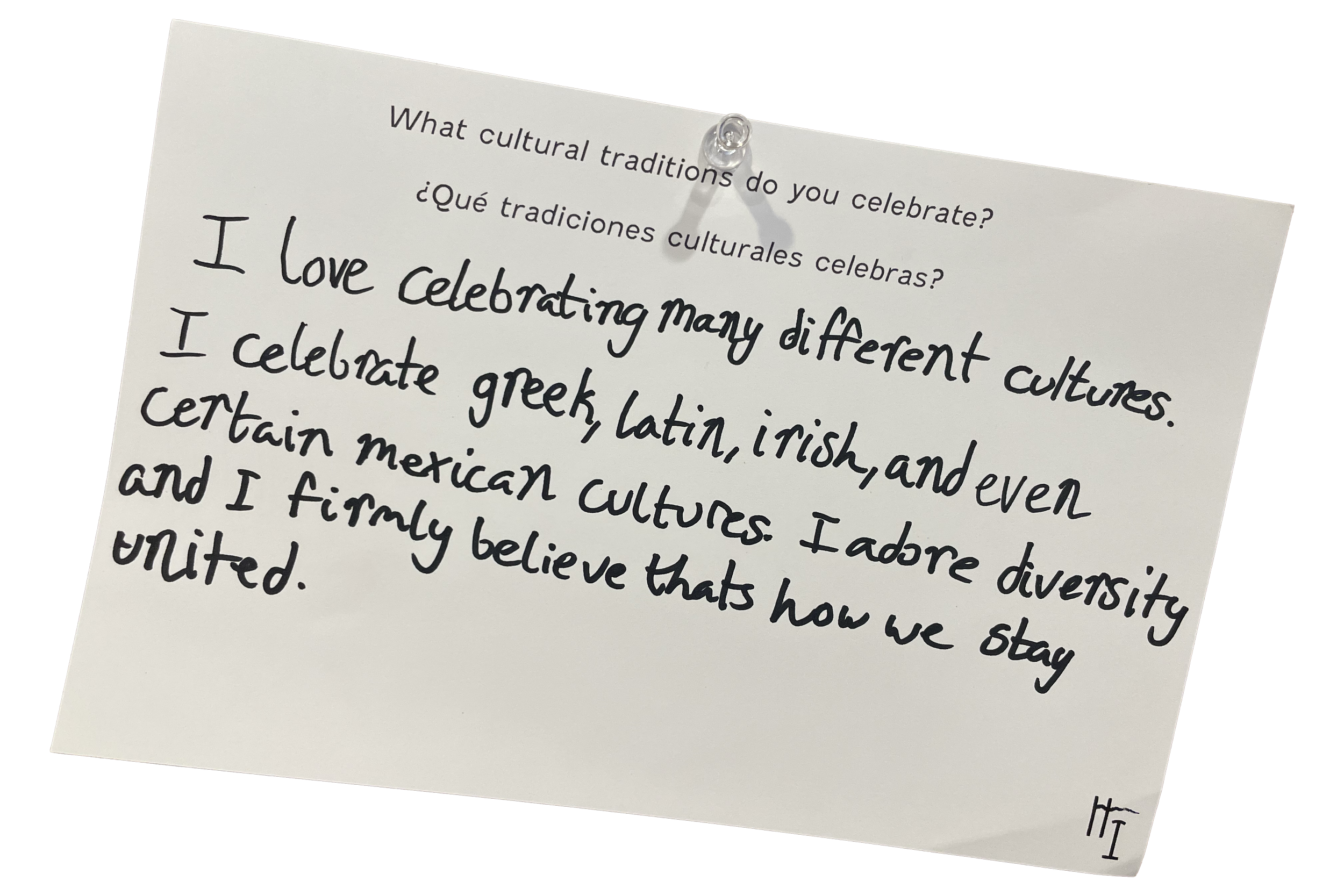
"And people connected with each other through these customs, something we really need now. Connection."
Monument Imagining
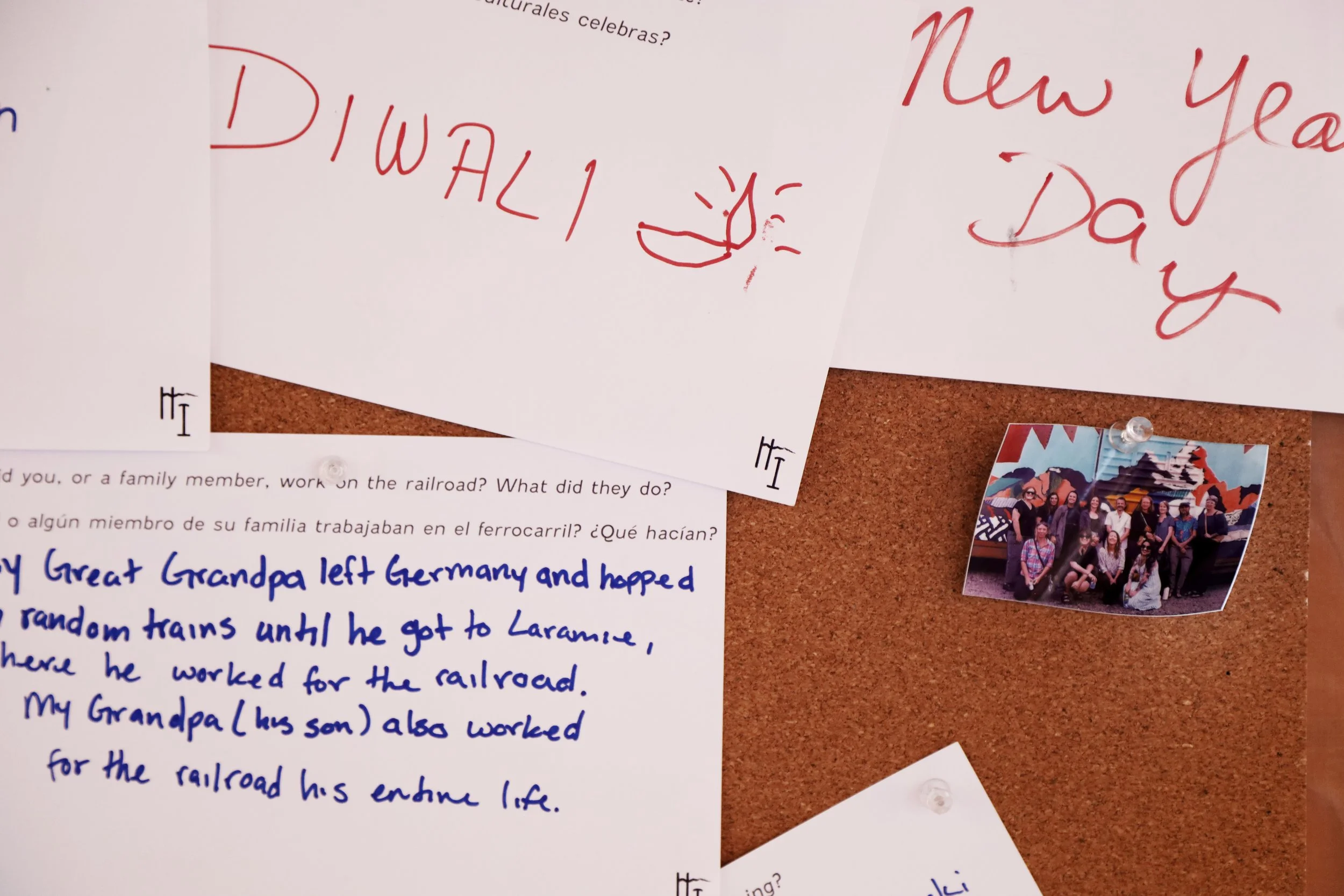
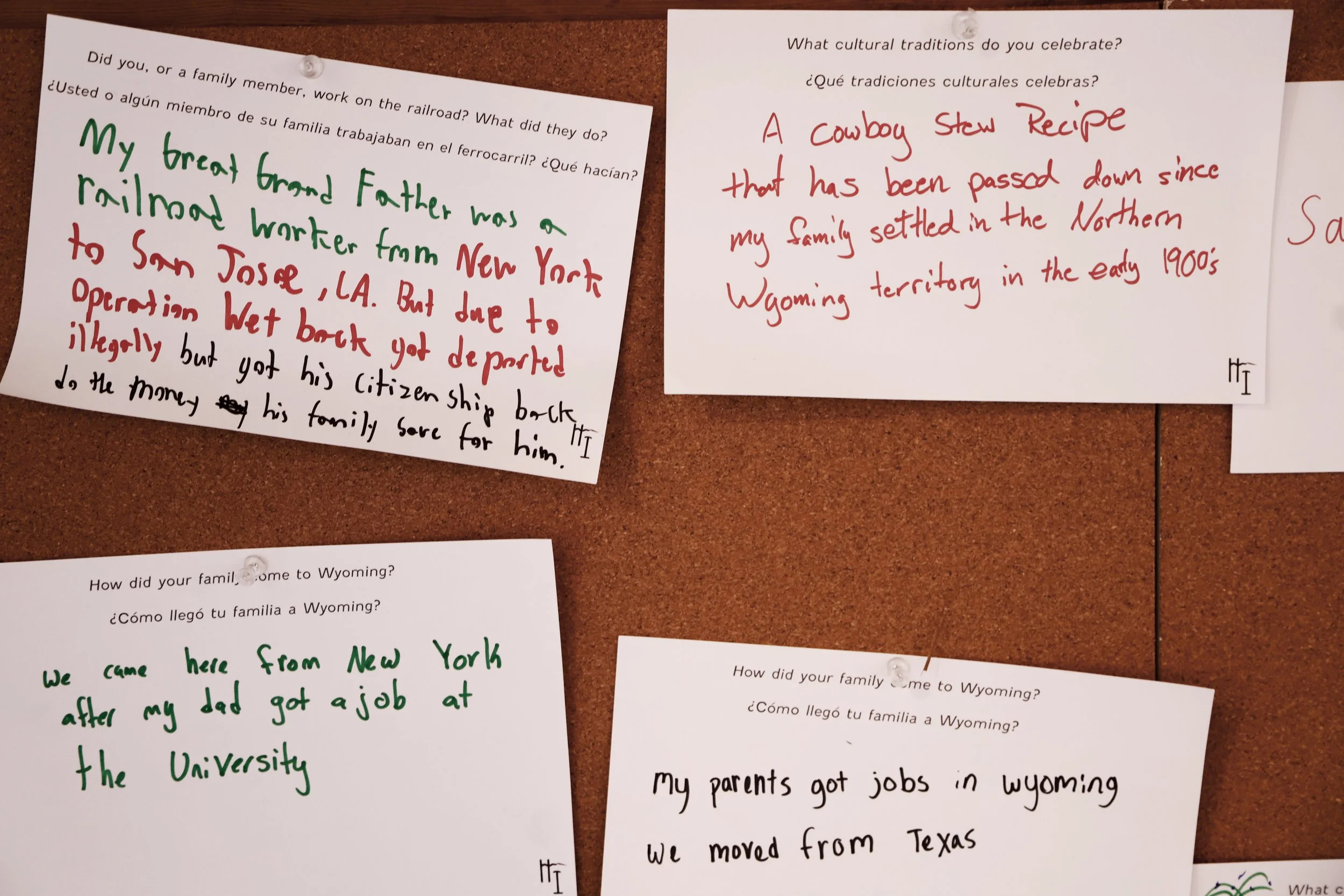
High school students who visited High Iron were invited to imagine their own monuments — to ask the same questions the project asks: who gets remembered, what gets built, and why. Their work is a reminder that this isn't just history. It's a practice anyone can carry forward.
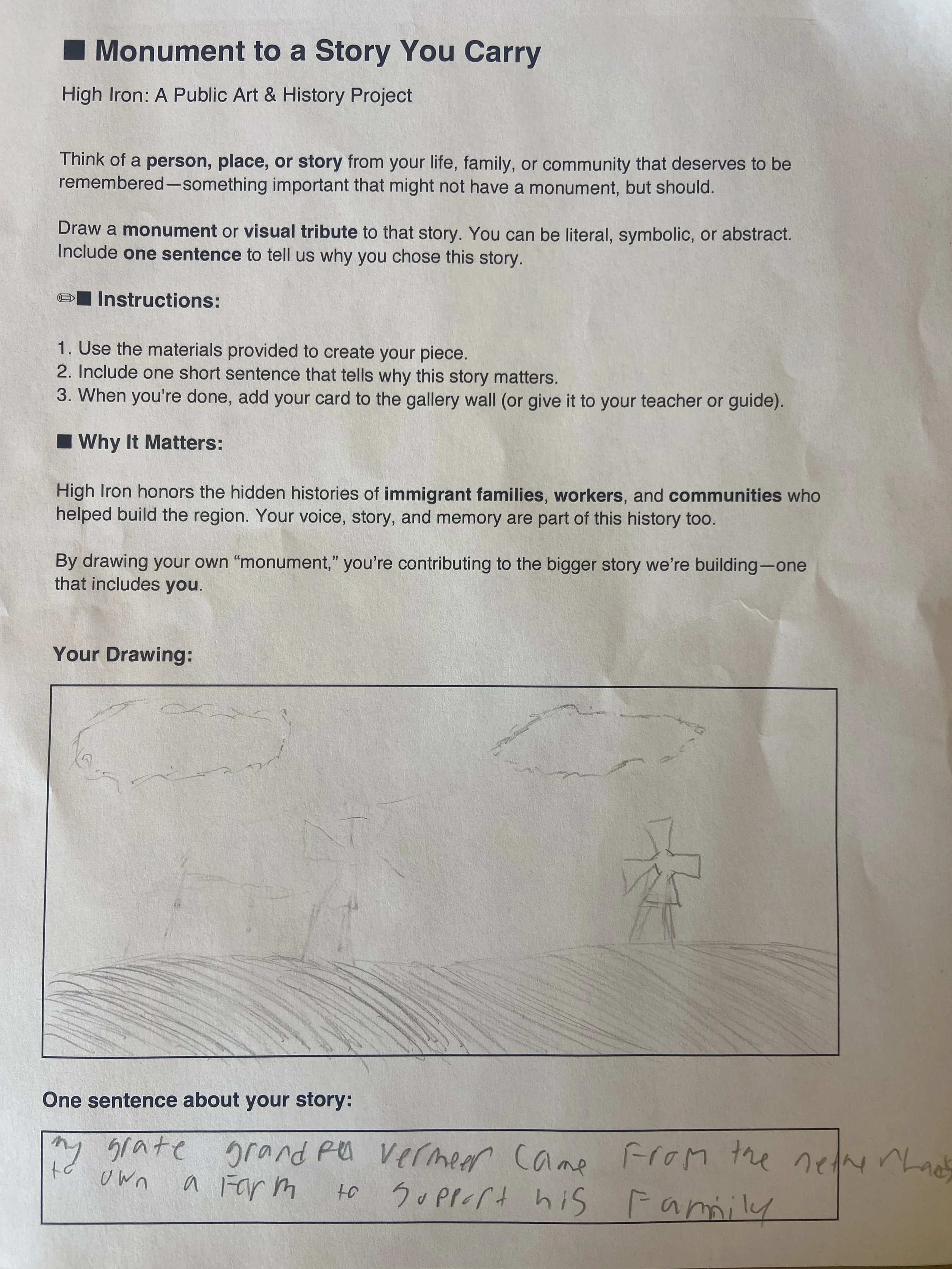
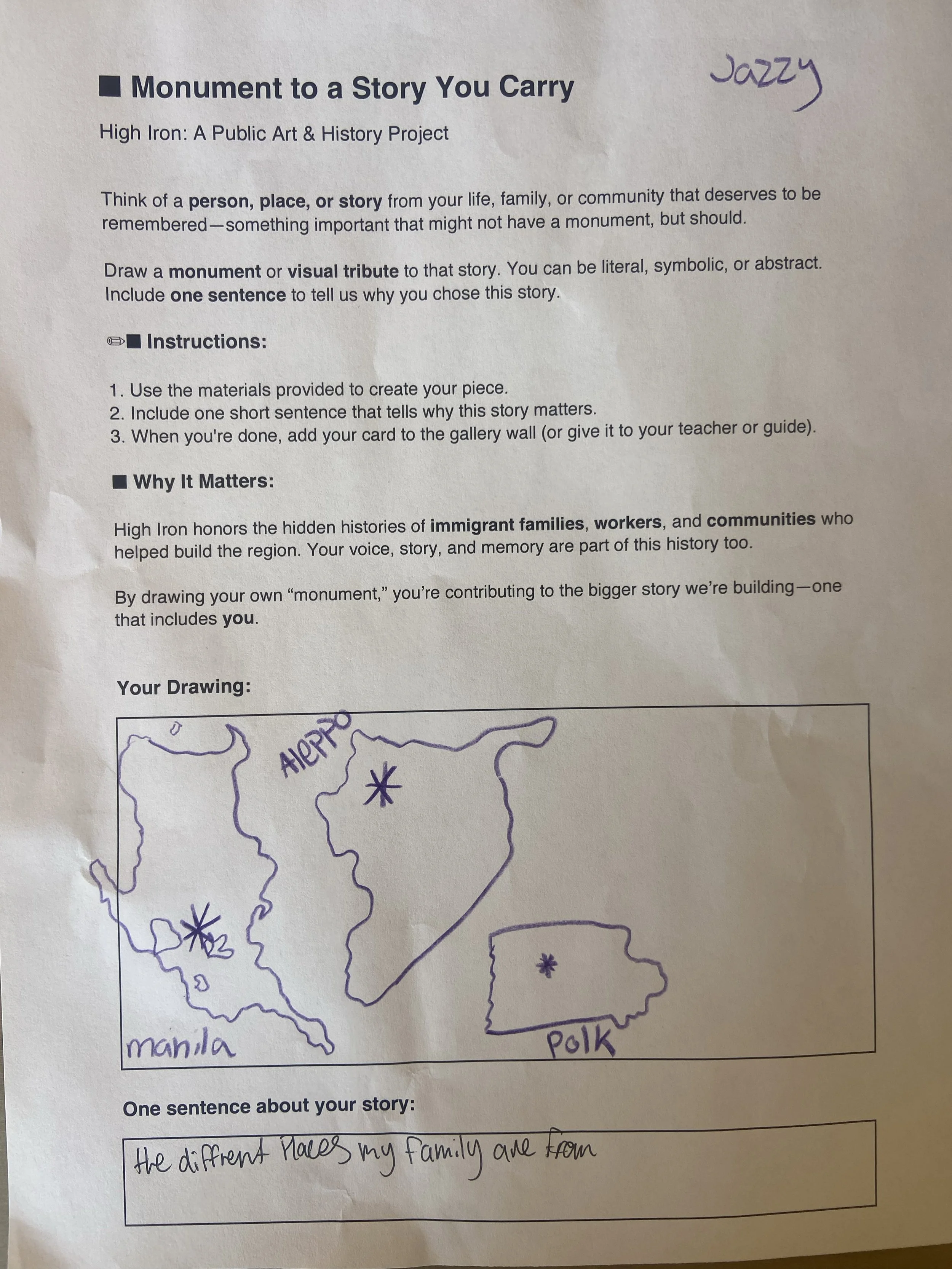
"I'm 4th generation Japanese Wyomingite, just like Lena. I didn't know Japanese workers built the railroad and built Wyoming. I'm going to tell my family. I'm going to make sure they know too."
— A Visitor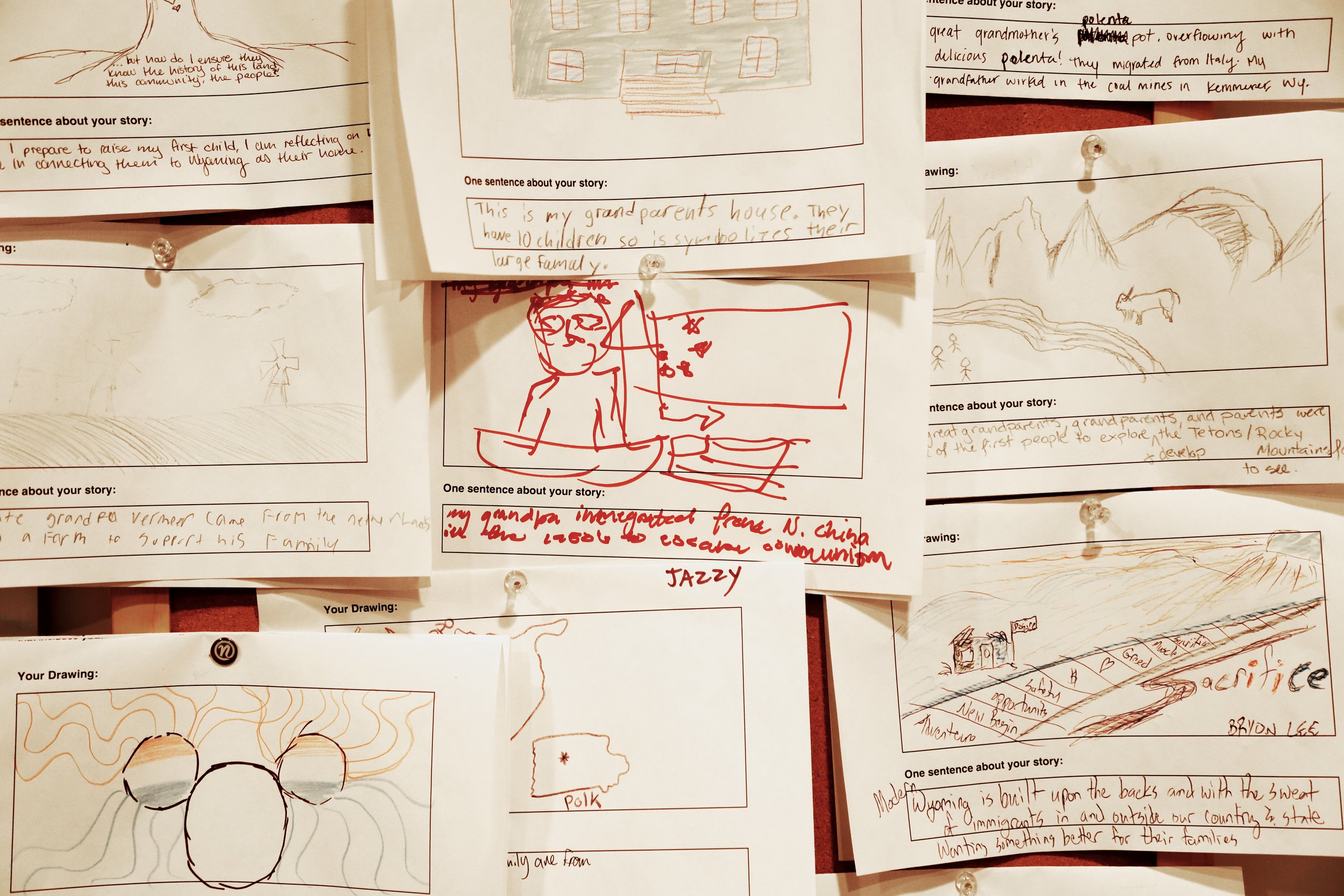
Will Bowling
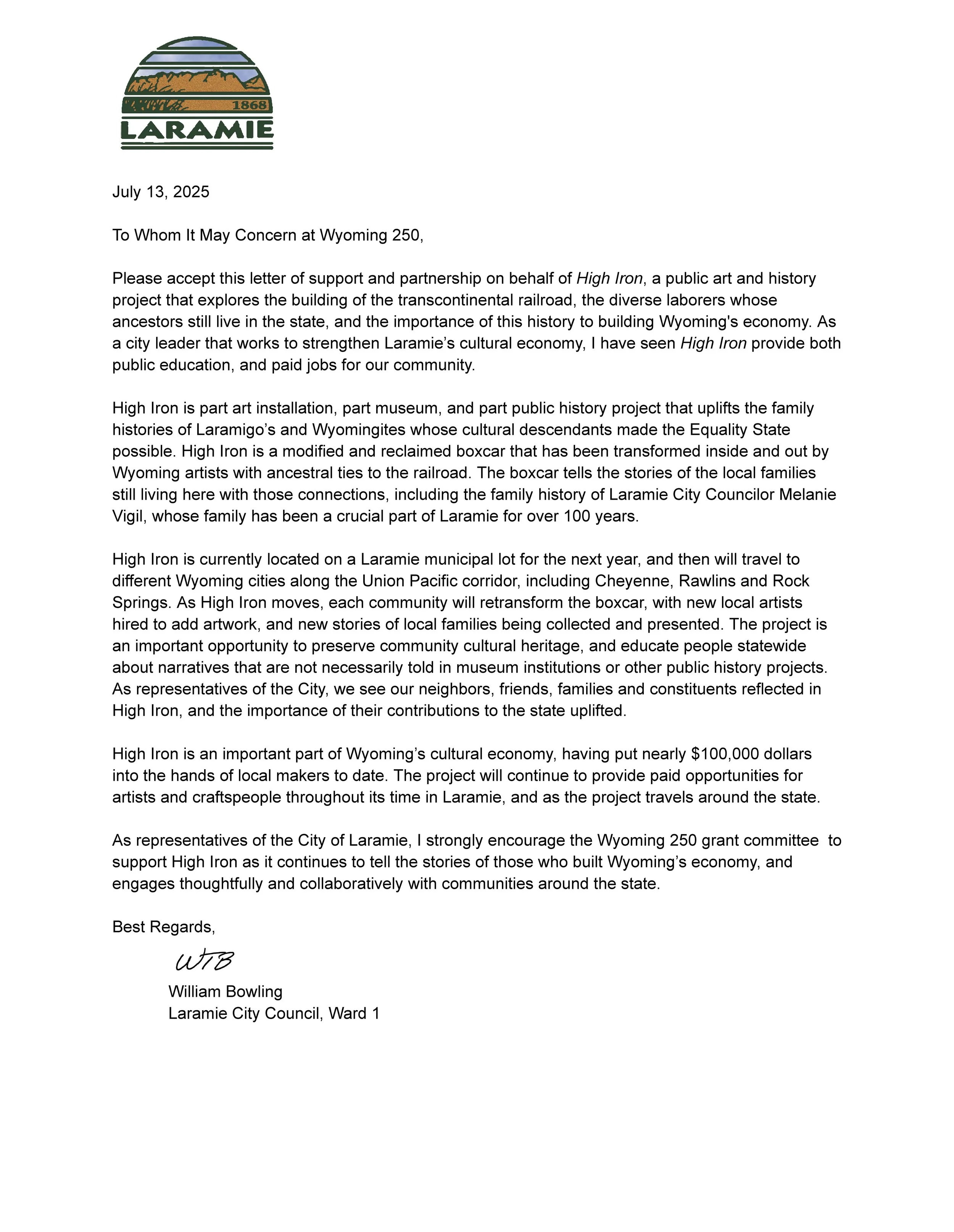
City Councilor, Ward 1 · Laramie"As representatives of the City, we see our neighbors, friends, families and constituents reflected in High Iron, and the importance of their contributions to the state uplifted."
"And they don't teach that in school. They look at it from one point of view: expansion, manifest destiny. But that's not the truth of it. That's somebody's idea of the way it should be displayed."
"What High Iron is trying to do is tell a bigger story — not just celebrating the people that built it, but reminding people of the truth of the history."
What Got
Left Out
After the Civil War — on the occupied lands of the Shoshone, Crow, Arapaho, Comanche, Cheyenne, Ute, and Lakota peoples — the territory we know as Wyoming was one of the most diverse regions in the nation. As settlers moved west, infrastructure was essential, and the labor to build it was urgent.
Immigrant workers came to do extraordinarily dangerous work: digging coal in the mines, laying rail across mountain and plain. Following the Chinese Exclusion Act of 1882, Chinese labor was curtailed and other immigrant communities were recruited to fill the void — workers brought in from across the globe, the diversity itself a calculated strategy to prevent unionization.
"These stories of critical labor, community creation, and people taking care of each other have been erased from this state's origin story — replaced by the myth of the rugged lone white cowboy."
And yet: Wyoming became home to robust, living cultural communities. African Americans, Mexicans, Swedes, Greeks, Italians, Japanese, Slovenians — and dozens more — worked the rails and the mines while also building churches, social clubs, mutual aid societies, and labor organizations that crossed ethnic lines.
They built a national industry and strengthened the U.S. economy and transportation system. They made Wyoming. Their names are not on any monument.
High Iron celebrates the labor, the community, and the people who built our state — giving their stories the place they've always deserved.
"My grandfather came over as a sheep herder and later he worked for the railroad, just like Rubel's dad. It's neat to see ancestors in this car that remind me of my own. I bet other people are seeing themselves represented too."
— A Visitor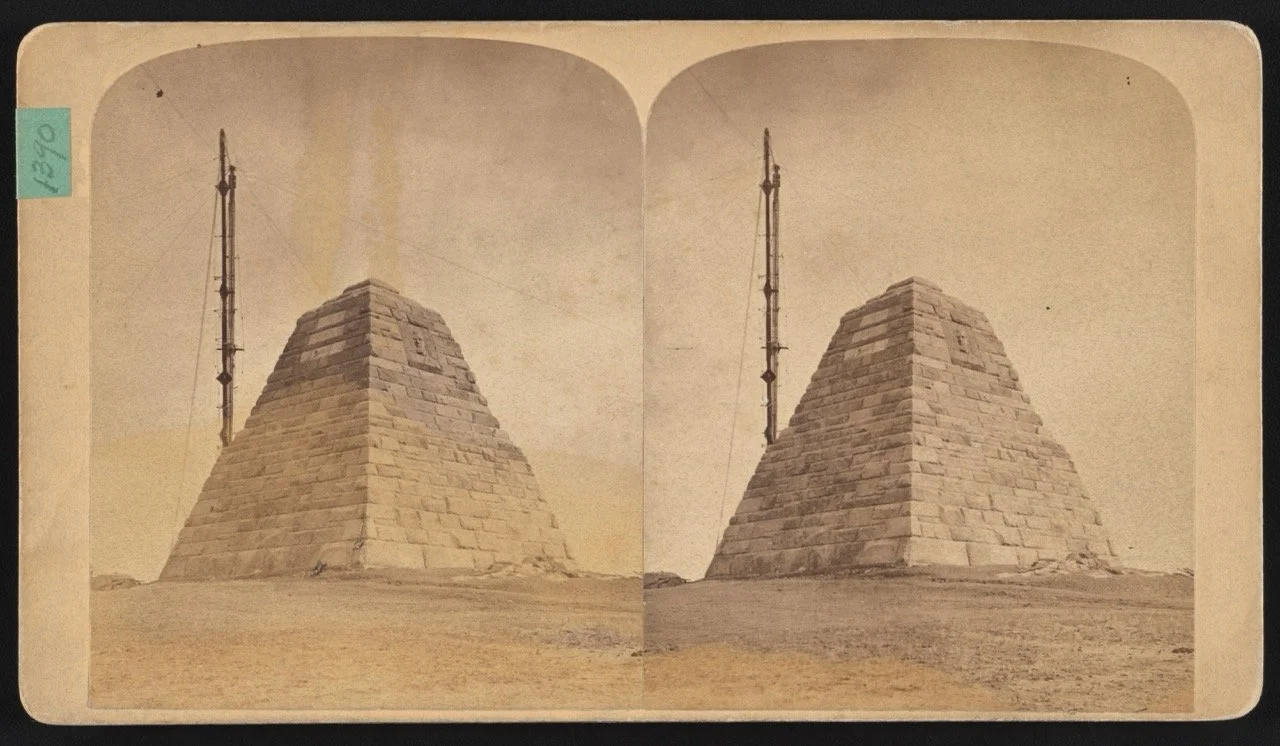
The Ames Monument honors the two men who financed the Transcontinental Railroad. It is the only monument to the Transcontinental Railroad in Wyoming.
Learn More →